




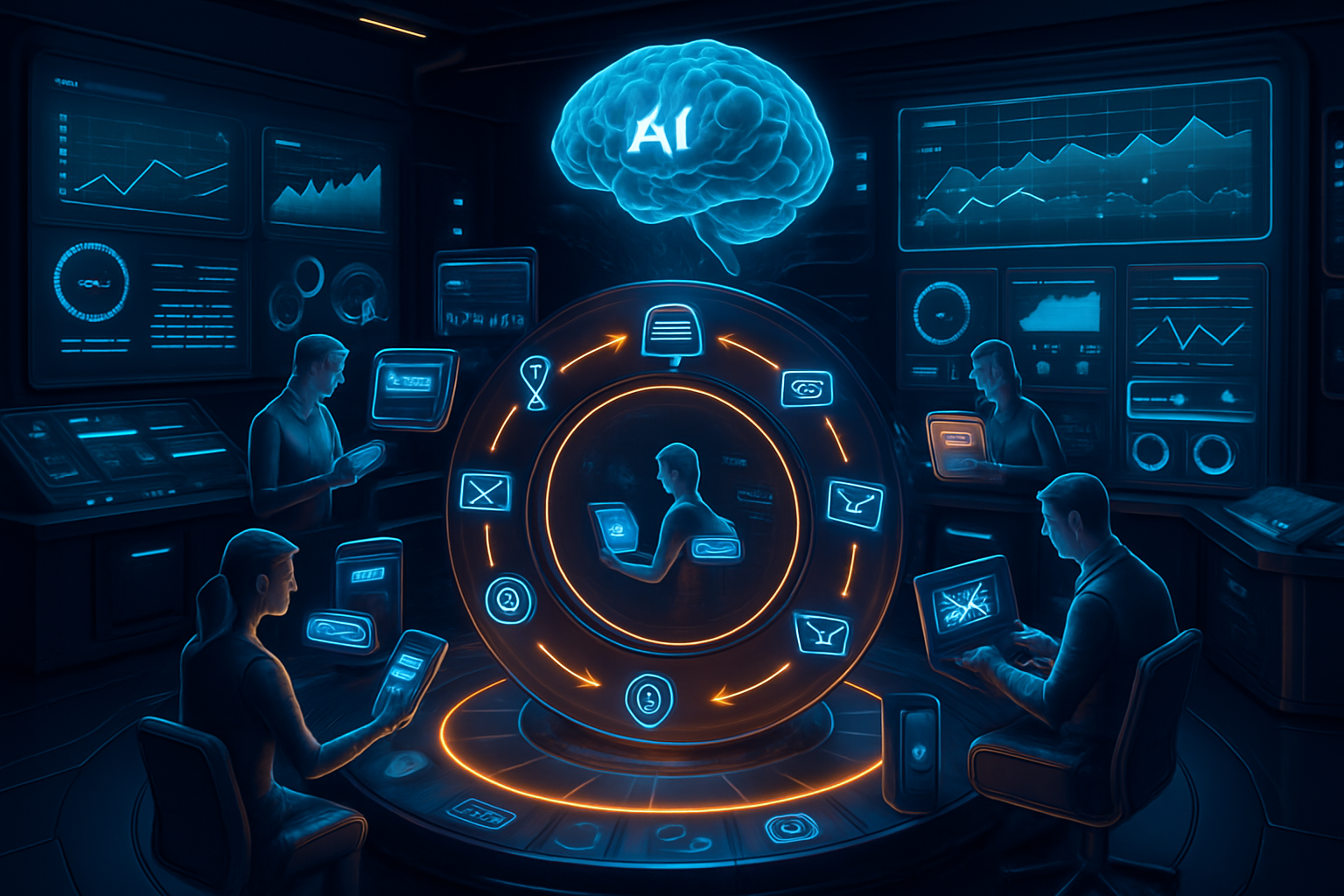
Your customers don’t shop in silos. They browse on mobile during lunch, research on desktop at work, and buy in-store on weekends. Yet most businesses treat each touchpoint like a separate world.
Here’s the reality: customers now engage through an average of six different channels during their purchase journey. When these channels work together seamlessly, magic happens. Your brand becomes unforgettable. This integration creates true omnichannel experiences, where every interaction feels connected and consistent across all platforms.
Omnichannel marketing campaigns transform scattered customer touchpoints into one powerful experience. Think of it as connecting all your marketing dots. Every email, social post, and store visit works together to guide your customer journey. Each of these is unified into a single interaction, ensuring a seamless and frictionless experience for your customers.

The result? Higher customer satisfaction and more loyal customers who stick around longer. RapidLeads Pro specializes in creating these integrated experiences through website development, SEO, content strategy, and AI automation—helping you follow the best practices set by leading brands in omnichannel marketing.
Ready to turn your disconnected touchpoints into a conversion machine? Let’s explore how successful brands build omnichannel marketing campaigns that deliver real results.
Key Takeaways
Customers use an average of six channels during their buying journey
Integrated touchpoints create seamless customer experiences that boost satisfaction
Connected channels work together to guide customers from discovery to purchase
Addressing customer needs at various stages of the journey ensures each touchpoint is optimized for engagement and conversions
Omnichannel strategies transform scattered interactions into loyal customer relationships
Successful campaigns require coordinated website, SEO, content, and automation efforts
Introduction: Why Omnichannel Marketing Matters Today
Your customers move through a digital world where every touchpoint is important. They find your brand on Instagram in the morning. They look up your products on Google during their commute. They check prices on their phone at lunch.
Then, they visit your store to buy. The challenge is that customers expect every interaction to feel connected and personalized. The customer’s journey spans from initial awareness to purchase and continues through post-purchase interactions, making every step important for building lasting relationships.
Old marketing ways make experiences feel broken. Your social media and email send different messages. Your in-store experience is different too.

This broken approach wastes your efforts and hurts customer engagement. Today’s shoppers don’t want to give their info over and over. They get upset when switching from phone to computer. They want smooth transitions that respect their time.
The tech world makes things harder. Businesses deal with too many tools that don’t talk to each other. Customer info gets stuck in different places.
Customers now want to interact with brands in many ways. They use social media, websites, apps, email, SMS, and stores. Each place is a chance to build trust or lose it.
Traditional Marketing | Omnichannel Marketing | Customer Impact |
|---|---|---|
Separate channel strategies | Unified cross-channel approach | Consistent brand experience |
Disconnected customer data | Centralized customer profiles | Personalized interactions |
Channel-specific messaging | Coordinated communication | Seamless journey progression |
Isolated team efforts | Collaborative team alignment | Enhanced customer engagement |
Omnichannel marketing lets you meet customers where they are. You give them consistent, relevant experiences. You make it easy for them to buy.
This isn’t just a nice thing to do anymore. It’s essential for survival in today’s market. Identifying critical touchpoints and insights within the customer’s journey is critical for optimizing your marketing strategy and ensuring business success. Companies with great customer experience keep 89% of their customers. Those with weak strategies keep only 33%.
The real question is how fast you can start using omnichannel marketing. It’s about staying ahead and meeting customer needs.
What Are Omnichannel Marketing Campaigns?
Omnichannel marketing campaigns make every customer touchpoint smooth. They act like a personal concierge that remembers everything about you.
They use customer data from everywhere. Your email and website know each other. Your mobile app and store purchases talk to each other too. Customers can manage their account preferences or update their information across all platforms, ensuring a consistent experience.
This makes random interactions into real relationships. If you leave something in your cart online, you get a special email. When you go to the store, the staff knows what you like.

The big difference is how they share information. Old marketing uses multiple channels alone. Each one works by itself without sharing.
New marketing connects some platforms. But it misses some important moments. Touchpoints are not always connected.
Omnichannel marketing fixes this. It makes every interaction count. Customer behavior shows up everywhere at once.
For example, a customer looks at products on your app at lunch. Then, they get emails with those items. When they visit the store, the staff knows exactly what they want.
This keeps customers up to date with the same message everywhere. No more mixed messages or old info.
Marketing Approach | Channel Integration | Data Sharing | Customer Experience |
|---|---|---|---|
Multichannel | Independent channels | Isolated data silos | Fragmented interactions |
Cross-channel | Some connections | Limited data sharing | Partially connected |
Omnichannel | Fully integrated | Complete data unification | Seamless journey |
RapidLeads Pro uses this deep understanding for better customer experiences. Our platform combines multichannel outreach with real-time analytics for these campaigns.
This means your customers get the same, special experience everywhere. It builds loyalty and boosts sales. Every touchpoint strengthens your brand while meeting each customer’s needs.
The Core Benefits of Omnichannel Marketing
Omnichannel marketing changes businesses in big ways. It helps your bottom line and keeps you ahead of the game. It makes your whole business better.
Enhanced Customer Retention Drives Profit Growth
Keeping customers happy is key. An omnichannel marketing strategy makes it happen. A 5% boost in keeping customers can increase profits by 25% to 95%.
Happy customers become brand fans. They stick with you because they feel valued everywhere they interact.

Brands that focus on customers see big wins. Omnichannel marketing leads to 62% more sales of high-value items. This is because they touch customers in more ways and make each interaction count.
Your sales team can lead prospects through detailed paths. Each step builds trust and moves them towards big buys.
Significant Cost Savings and Resource Optimization
Omnichannel marketing saves 10-30% on marketing costs. It stops money from being wasted on campaigns that don’t work together.
Your marketing budget goes further. It supports your overall plan, not just one-off ideas.
Operational Efficiency That Scales Your Business
Integrating omnichannel makes your systems work better together. Manual work goes down, and data gets more accurate.
Your team does more strategic work and less busywork. This makes you stand out in a fast-paced market.
Sustainable Competitive Advantage
Great customer experiences through omnichannel marketing give you a strong edge. It’s hard for others to take your customers because they’re so invested in your brand.
These benefits are real and can change your market position. Mastering omnichannel marketing builds loyalty that leads to long-term success.
Understanding the Customer Journey in Omnichannel
Every good omnichannel plan starts with a simple fact. Customers don’t just go straight from one place to another. They move around, use different devices, and make choices that might surprise even the most skilled marketing team. Getting this complex movement is key to making campaigns stand out. Mapping and managing the customer journey is a complex process, as it involves understanding and coordinating multiple touchpoints and interactions across channels.
Customers might find your brand on social media platforms. Then, they might check your website for more info. After that, they might compare prices on mobile apps. And they might buy in your brick and mortar store. This path isn’t random. It follows patterns that smart marketers can spot and improve.
“The customer journey is not a path, but a web of interconnected experiences that shape every buying decision.”
What Is The Customer Journey?
The customer journey is every interaction a person has with your brand. It starts with awareness and ends with a purchase. It’s like a story where your customer is the hero, and your brand helps them solve a problem or meet a need.
This journey has five main stages. The first stage is getting attention. The second is making a purchase. The third is growing the relationship after the sale.
The fourth stage is keeping customers loyal. The fifth stage is winning back inactive customers. Each stage needs its own approach to keep customers moving forward.
Each stage needs different messages, channels, and tactics to guide customers smoothly toward the next phase. Your marketing team must know these stages and create special experiences for each one.
Mapping Customer Journeys for Success
Journey mapping turns customer behavior into useful insights. Start by listing every point where customers touch your brand. This includes social media platforms, email, website visits, phone calls, and in-person visits.
RapidLeads Pro helps with journey mapping as part of campaign architecture. It helps businesses plan touchpoints across all channels. This process shows where customers struggle or move faster in their buying journey.
Imagine a customer who starts on Instagram, then goes to your website, visits your brick and mortar store, and buys online later. Each step needs to work together to avoid losing sales.
Successful mapping needs three things: data from all channels, customer feedback, and regular pattern analysis. Focusing on the most impactful touchpoints or stages ensures your efforts drive the greatest improvements. Your team should update these maps every quarter to keep up with changing customer needs and new channels.
The goal is to make a journey that feels natural and helpful, not pushy or confusing. When customers can move easily between channels while keeping their progress, you’ve set the stage for lasting omnichannel success.
Building Campaign Architecture: The Blueprint for Success
Campaign architecture is like a blueprint for your marketing. It makes all your marketing efforts work together. This creates a smooth experience for your customers.
When businesses invest in good campaign architecture, things get better. Your in store and online experiences start to match. Customer data moves easily between systems. Every interaction builds on the last one.
“Architecture is not about the building—it’s about the experience within the building.”
What Is Campaign Architecture?
Campaign architecture is a plan for your marketing. It makes sure your email, social media, and website all match. Your brand’s voice is consistent everywhere.
It’s not hard if you do it step by step. Start with customer data. Then build your messaging framework. Connect your channels with automated workflows.
Key Components of Campaign Architecture
Your campaign architecture needs five main parts. These parts work together to give your customers a smooth experience:
Data integration systems that connect customer information across all platforms
Messaging frameworks that ensure consistent brand voice everywhere
Workflow automation that triggers the right message at the right time
Performance tracking that measures success across all channels
Optimization protocols that continuously improve your results
The 5 Main Points of Architecture
Building good campaign architecture has five key points. First, data integration connects all customer info into one profile. Second, channel coordination makes sure your messages are the same everywhere.
Third, workflow automation makes your processes smoother. Fourth, measurement frameworks track how well you’re doing. Fifth, optimization protocols help you get better over time.
These five points help you work more efficiently. Your team can focus on big ideas, not small tasks. You get better results with less effort.
Channel Integration Explained
Channel integration connects your marketing efforts. A customer gets an email, visits your site, and then comes to your store. Each step recognizes them and keeps the conversation going.
This needs a team effort. Marketing, IT, legal, customer service, and sales all need to work together. They make sure your brand is consistent everywhere.
The outcome is a brand that feels like one thing to your customers. They get messages that fit their whole journey with you. Your in store staff knows about their online activities. Your emails talk about their recent buys.
Mastering campaign architecture means no more juggling many systems. You create a marketing machine that works well, not hard.
Choosing the Right Channels for Your Omnichannel Approach
Choosing channels is not about how many you use. It’s about picking the right ones for your target audience. You should focus on where your customers like to be, not where you think they should be. This is key to good omnichannel strategies.
Your choices should consider three things: what your customers like, what you want to achieve, and what you can do. Smart marketers know that being everywhere can weaken your message and stretch your budget too thin.
Popular Channels for Omnichannel Marketing
Email is a top choice for digital marketing campaigns. It sends detailed info right to your customers’ inboxes. It’s great for helping leads grow and keeping in touch with current customers.
Social media is where new people find you. Instagram is all about pictures, while LinkedIn is for business folks. Each platform offers special ways to connect with your audience.
WhatsApp is changing the game for talking to customers. It lets brands handle everything from start to finish in one app. This means new ways for businesses to make money.
Mobile apps make things easy for your customers. They send messages, find you nearby, and make shopping easy. And don’t forget about physical stores. They offer something special that digital can’t.
RapidLeads Pro helps pick and use the best channels. They use social media, email, WhatsApp, LinkedIn, mobile, and stores for a full omnichannel strategy.
Channel Strategy Examples
Good channel use means the same message everywhere. Your brand should be clear whether it’s on Instagram, in an email, or in a store.
Here’s a plan: Use social media to get noticed. Then, send emails with more details. Use WhatsApp for personal service.
Another way is to use LinkedIn for B2B leads and email for keeping them interested. Mobile apps make buying easy, and stores let customers try things out.
Know what each channel is good at. Instagram is for pictures that sell. Email is for detailed info. WhatsApp is for quick chats.
Your target audience should tell you what channels to use. Young people like Instagram and WhatsApp. Business folks like LinkedIn and email. Try different things to see what works best for your customers.
Remember, your message should be the same everywhere. But adjust it for each platform and audience. Keep your brand’s voice true across all channels.
The Role of AI in Omnichannel Marketing
Artificial intelligence changes how businesses talk to customers everywhere. It makes omnichannel marketing better by guessing what customers want before they ask. This is called predictive precision.
AI looks at how people act on mobile devices and computers. It makes a complete picture of a customer right when they first interact with your brand. It uses data from search engines, social media, and past interactions.
Making the most of AI in omnichannel means knowing how it works. It uses machine learning to find patterns in huge amounts of data. These patterns might be too hard for humans to see.
AI Tools to Improve Customer Experience
Smart chatbots answer questions all day, every day, on all platforms. They give the same answers whether you use mobile devices, websites, or social media. These chatbots learn from every chat they have.
Predictive analytics tools guess what customers will do with great accuracy. They figure out the best time to talk to customers and make experiences personal. Your marketing team gets useful insights instead of just data.
Automated systems take care of simple tasks like sending booking confirmation emails. This lets your team focus on big ideas and creative work. AI does the work while you dream up new things.
Recommendation engines suggest products based on what you like and have looked at before. They use data from search engines and past buys to make good suggestions. Customers get experiences that feel just right, not forced.
AI-Driven Campaign Optimization
Machine learning algorithms test different parts of campaigns all the time. They find what works best and change things automatically. Your campaigns get better without you having to do anything.
AI follows how customers move from knowing about a product to buying it. This lets you target them exactly when they’re ready. It’s like knowing exactly when to ask for a sale.
Dynamic content optimization makes sure the right message gets to the right person at the right time. AI looks at how well things are doing and what people like. Your campaigns get better with every interaction.
AI Function | Primary Benefit | Implementation Time | ROI Impact |
|---|---|---|---|
Predictive Analytics | Anticipate customer needs | 2-4 weeks | 25-40% increase |
Chatbot Integration | 24/7 customer support | 1-2 weeks | 15-30% cost reduction |
Dynamic Content | Personalized messaging | 3-6 weeks | 20-35% engagement boost |
Campaign Optimization | Automated performance tuning | 4-8 weeks | 30-50% efficiency gain |
The technology doesn’t replace human insight—it amplifies it. AI gives data-driven advice that makes your decisions better. You keep the creative control while using machine precision.
Smart automation handles the same tasks on all channels at once. It keeps your brand’s message the same everywhere. Whether it’s email, social media, or direct contact, your brand’s voice stays the same.
AI-powered attribution modeling shows which channels bring in the most valuable customers. It tracks the whole journey from first contact to final sale. You can spend your budget where it really matters, based on real results.
Personalization & Consistency: The Heart of Omnichannel
Today’s customers want to feel special and connected with every brand interaction. They expect personalization and consistency in marketing. When you get this right, you create deep connections with your audience.
In the competitive world of omnichannel, generic messages don’t cut it. People notice when brands treat them as unique individuals. RapidLeads Pro focuses on personalization and consistency to make every touchpoint memorable.
Customers love it when brands offer personalized deals and product suggestions. In fact, 49% of shoppers say it improves their brand experience. And 31% say it makes them come back for more.
Your omnichannel strategy needs to be relevant at every step. This means your emails should mention recent store visits. Your mobile app should know about your website browsing. And your social media should match your purchase history.
Many businesses find it hard to connect all their channels. They do great in one place but struggle to link it all. Success comes from treating each customer as special while keeping your brand’s voice consistent.
Personalization Element | Consistency Requirement | Customer Impact | Implementation Priority |
|---|---|---|---|
Product Recommendations | Unified Customer Data | Higher Engagement | High |
Communication Timing | Brand Voice Alignment | Improved Trust | Medium |
Content Relevance | Visual Identity Standards | Enhanced Loyalty | High |
Channel Preferences | Message Synchronization | Reduced Friction | Medium |
Creating Engaging Experiences Across Touchpoints
Real personalization is more than just using names in emails. It’s about knowing what customers want and need at every stage. You need to send the right message at the right time through the best channel.
Think about how different touchpoints work together. If someone looks at products online, your email should mention those items. If they visit your store, your app should notice.
This smooth integration makes experiences feel natural and enjoyable. Customers like it when brands show they know their journey. The secret is being timely and relevant.
Your consistency plan should keep your brand’s identity strong. But it should also let each channel be itself. Social media can be casual, but your core message should stay the same everywhere.
Measuring Omnichannel Success
Measuring success makes omnichannel campaigns clear and effective. You need systems that track every customer interaction. This shows how your omnichannel experience affects your business.
Success isn’t just about one channel. It’s about how all channels work together. Your strategy should link landing pages, email, social media, and in-store activities.
Key Metrics to Track
Customer lifetime value is key for success. It shows how much money each customer spends. This helps you see your campaign’s lasting effect.
Cross-channel conversion rates show how customers move between touchpoints. Watch how push notifications lead to landing page actions. See how email subscribers buy in stores. These show how channels work together.
Attribution accuracy is important. It tells you which channels get the credit for sales. Models like multi-touch attribution show the whole customer journey. You’ll see which touchpoints matter most.
Engagement consistency is about a seamless experience across channels. Track message alignment, response times, and brand voice. These affect customer happiness and loyalty.
Measurement Setup: What Businesses Need
Your setup needs advanced analytics platforms. RapidLeads Pro uses tools like Cometly, Google Analytics, and Hotjar. These give you instant insights on campaign performance.
Unified analytics systems track campaign performance across channels. They show which campaigns and touchpoints lead to sales. This helps you make better marketing choices.
Real-time dashboards help you make quick changes to campaigns. Set up alerts for important metrics. Watch landing pages, push notification, and cross-channel conversion patterns.
Data integration tools connect your CRM, email, social media, and analytics. This gives you a full view of your omnichannel experience. You’ll find ways to improve and grow successful strategies.
Remember, success comes from constant monitoring and analysis. Regular reports help you spot trends and make smart choices. Your setup is the base for ongoing improvement and better campaigns.
Overcoming Challenges in Omnichannel Marketing
Omnichannel marketing has big hurdles. But, these challenges aren’t too hard to beat with the right plan and attitude.
Data integration is a big problem for many. Your customer info is spread out in different systems. This makes it hard to see the whole picture and miss out on sales.
Imagine this. If your facebook ad says one thing but your online order does another, people notice. They lose trust quickly.
Many campaigns struggle with being consistent. Customers want smooth engaging experiences at every stage. If they don’t get it, they leave.
Internal silos cause problems too. Your marketing, sales, and customer service teams work alone. This makes customers confused and costs you money.
“It’s better to excel in fewer channels than to provide mediocre experiences across many.”
Old tech and tight budgets also hold you back. You can’t easily link new tools with old systems. This limits how many channels you can use well.
Here’s how successful businesses beat these challenges:
Use unified platforms to connect all customer data
Make teams focus on what’s best for the customer, not just their own goals
Make sure everyone talks to each other clearly
Focus on quality over quantity in your channels
Have the same process for every experience
RapidLeads Pro helps tackle these common problems. It offers integrated solutions and expert advice for smooth setup.
The platform solves data integration issues by putting all your customer info in one place. This stops you from missing out on chances.
You’ll also get help on working together as a team. When everyone aims for the same customer goals, things run smoother. Customers notice the difference right away.
Remember this key principle: Tackle challenges one by one, not all at once. Start with the biggest problem. Fix that first. Then move on to the next one.
Don’t let these problems stop you from giving your customers amazing engaging experiences. Every challenge you solve brings you closer to being great at omnichannel marketing.
Case Studies: Omnichannel Success Stories
Big brands show how omnichannel campaigns help them win and make more money. They connect with customers in many ways.
Brands that focus on customers see 62% more sales of high-value items. This shows that working together across channels really works.
Starbucks changed coffee shopping by linking their app with stores. You can order and pick up drinks without waiting. This makes things easy and helps them learn about you.
Disney made magic with MagicBands. They let guests use one thing for everything. It makes their visit better.
Sephora links online and in-store visits through Beauty Insider. You can look up products online and get advice in stores. This keeps things connected and builds trust.
Amazon goes beyond online shopping with Amazon Go stores. You can shop without checking out. It shows how tech can make things smooth.
Nike uses one system for all customer data. Whether you shop online, on their app, or in stores, you get the same experience. This helps them suggest products and market better.
Brand | Omnichannel Strategy | Key Results | Success Factor |
|---|---|---|---|
Starbucks | Mobile app integration | 25% of transactions via mobile | Seamless ordering experience |
Disney | MagicBand ecosystem | Enhanced guest satisfaction | Unified park experience |
Sephora | Beauty Insider program | 80% revenue from loyalty members | Personalized recommendations |
Nike | Unified data platform | 30% increase in customer lifetime value | Consistent brand experience |
These stories show what works. Unified customer data makes experiences better. Being consistent builds trust.
The best omnichannel plans focus on customer value, not just tech. They make each touchpoint better and more valuable.
These examples show that success takes time and effort. The biggest brands didn’t get there fast. They kept improving and stayed customer-focused.
Future Trends in Omnichannel Marketing
New tech is changing how we market. It brings opportunities for your business. Soon, you’ll connect with customers in new ways and boost sales.
Voice shopping is getting popular. Soon, customers will talk to smart speakers to buy things. This makes shopping more personal.
Augmented reality is changing how we see products. Customers can try products online before buying. This makes shopping better and reduces returns.
“The future of retail lies in creating seamless phygital experiences where the digital and physical worlds merge to deliver unprecedented customer value.”
Conversational commerce is the next big thing. AI chatbots will help with sales. They offer quick help and advice, making shopping better.
Predictive personalization is coming. It will guess what customers want before they ask. This makes shopping more personal and boosts sales.
“Phygital” experiences are changing retail. Customers will move easily between online and in-store. Your business needs to be ready.
Privacy-first marketing is key now. New rules mean you must be open and honest with customers. This builds trust and keeps customers coming back.
Real-time optimization is the future. AI will adjust your marketing as it goes. This means your business can quickly meet customers‘ needs.
Current Omnichannel | Future Innovation | Customer Impact | Business Benefit |
|---|---|---|---|
Basic personalization | Predictive AI personalization | Anticipates needs | Higher conversion rates |
Multi-channel presence | Phygital experiences | Seamless transitions | Increased engagement |
Standard chatbots | Conversational commerce | Natural interactions | Improved sales efficiency |
Manual optimization | Real-time AI adjustment | Better experiences | Reduced operational costs |
Voice commerce will get more complex. Customers will get expert advice through voice. This opens up more opportunities for sales.
Immersive tech like virtual reality will change shopping. Customers can explore virtual stores and attend events online. This lets you create new marketing ideas.
Omnichannel trends show that early adoption is key. Businesses that adapt fast will win in attracting and keeping customers.
Artificial intelligence will keep getting better. It will help with customer service, solving problems before they start. This makes customers happier and saves your business money.
The future is for businesses that see these trends as opportunities. By getting ready now, you can use new tech to grow and connect with customers better. Investing in the future will help your sales grow for years.
Final Thoughts: Start Building Your Omnichannel Campaigns Today
Your journey to omnichannel starts with a big choice: put customers first. This journey needs commitment, but it changes how your brand meets clients forever.
Begin by mapping your current buying experience. Find out where customers meet your channels and where there are gaps. These steps help you make better plans that work.
Smart companies use data to guide them. Customers want smooth experiences at every touchpoint. By improving each interaction with the right content, you make experiences that work.
Changing how you work is needed for integration. But the rewards are huge. You’ll get closer to customers, build loyalty, and see your business grow.
RapidLeads Pro is here to help you on your omnichannel path. We offer the skills and tools to change your marketing. We help you make customer experiences smooth and personal.
Your rivals are making omnichannel plans. It’s time for you to act. Every day you delay, customers pick brands that offer what they want.
Start today. Your success depends on the choices you make now.
FAQ
What is the difference between multichannel and omnichannel marketing?
Multichannel marketing uses different platforms alone. Omnichannel marketing links everything together. It makes every touchpoint know what happened before.
For example, if you leave something in your cart online, omnichannel systems will remind you in your email and app.
How does omnichannel marketing improve customer satisfaction?
Omnichannel marketing stops the problem of different messages. It makes experiences smooth, from one channel to another. This builds trust and loyalty.
What are the main benefits of implementing omnichannel strategies?
Omnichannel strategies bring big wins. They boost customer retention and increase revenue. They save costs and make operations more efficient.
They also give you a competitive edge with better customer experiences. These benefits are real and can improve your profits.
How do I map the customer journey for omnichannel success?
To map the customer journey, document all interactions. Find pain points and make transitions smooth. Customers move around a lot.
Your team needs a plan to support this movement. It’s not a straight line.
What is campaign architecture in omnichannel marketing?
Campaign architecture is your marketing plan. It connects all channels and messages. It includes data, channel coordination, and measurement.
This plan makes your marketing more efficient. It lets you personalize experiences in real-time.
Which channels should I include in my omnichannel approach?
Choose channels based on your audience and goals. Use email for loyalty, social media for discovery, and mobile apps for ease.
WhatsApp is good for direct chats, LinkedIn for B2B, and stores for experiences. Keep messages consistent but use each platform’s strengths.
How does AI enhance omnichannel marketing campaigns?
AI makes marketing smarter by analyzing customer behavior. It predicts when to engage and personalizes experiences. It handles tasks like booking confirmations.
AI creates detailed profiles for new customers. It uses data from various sources to improve campaigns.
How do I maintain consistency across different channels?
Treat each customer as unique but keep your brand voice the same. Your system should connect all interactions. This means emails should know about in-store visits.
Success comes from delivering relevant information. It should feel connected across all interactions.
What metrics should I track for omnichannel success?
Track customer lifetime value and cross-channel conversion rates. Also, look at attribution accuracy and experience quality scores. Your setup should capture data from various sources.
Focus on how channels work together. It’s more important than how each channel performs alone.
What are the biggest challenges in omnichannel marketing?
Challenges include data integration and consistency issues. You might face silos, technology limits, and budget problems. Success needs a solid plan.
Invest in unified platforms and align teams. Clear communication and integration are key. It’s better to excel in fewer channels.
How do I personalize experiences in an omnichannel environment?
Personalization is more than just using names. It’s about understanding customer needs and delivering the right content. Your systems should track customer data.
This lets you offer special offers that feel timely and relevant. It’s about making every interaction count.
What does the future hold for omnichannel marketing?
The future includes voice-activated shopping and augmented reality. There will be more opportunities for engagement. The digital and physical worlds will blend more.
Privacy will become a big concern as data rules change. It’s exciting but also requires careful planning.
How do I start building omnichannel marketing campaigns?
Start by mapping your customer interactions and finding gaps. Choose key touchpoints to integrate. Focus on unified data systems and consistent messaging.
Deliver personalized content and enhance every interaction. Omnichannel systems lead to better engagement and results.
Integrating the In-Store Experience into Omnichannel Campaigns
Bringing your in-store experience into your omnichannel marketing strategy is essential for delivering the seamless customer journey that today’s customers expect. When your physical locations and digital channels work together, you create a unified brand presence that boosts customer satisfaction and builds loyal customers who return again and again.
To achieve this, start by ensuring your messaging is consistent across every channel—whether a customer sees your brand on social media platforms, visits your website on their mobile device, or walks into your brick and mortar store. Train your marketing team and in-store staff to understand the value of omnichannel marketing and how every interaction, online or in store, shapes the overall customer experience.
A robust customer data management system is key. By tracking customer behavior and preferences across multiple channels, you can deliver personalized product recommendations, special offers, and services that feel tailored to each individual. For example, if a customer browses a product online, you can send a push notification or email with a relevant offer, and your in-store team can be ready to provide more information or a hands-on demo when the customer visits.
Operational efficiency also improves when you integrate your in-store and digital marketing campaigns. Use data analytics to identify which channels drive the most sales and focus your efforts there. This not only reduces costs but also increases customer engagement and revenue by targeting the right audience with the right message at the right time.
Leverage technology to bridge the gap between digital and physical. Push notifications can alert customers to in-store events or flash sales. Landing pages can provide pertinent information about in-store promotions. Social media and Facebook ads can drive foot traffic by highlighting exclusive in-store experiences. The goal is to create engaging experiences that encourage customers to interact with your brand wherever they are, making every purchase—online or in store—a positive experience.
By integrating the in-store experience into your omnichannel campaigns, you ensure that every customer touchpoint feels connected and valuable. This approach not only increases sales but also strengthens your brand’s reputation for service and innovation, turning first-time buyers into loyal customers.
Omnichannel Marketing Platforms and Tools
To master omnichannel marketing, businesses need the right platforms and tools to manage complex campaigns across multiple channels. These solutions act as the central nervous system for your marketing efforts, bringing together customer data, campaign architecture, and analytics to create a seamless experience at every customer touchpoint.
Omnichannel marketing platforms allow you to map the entire customer journey, from the first interaction on social media to the final purchase on a mobile device or in store. With features like campaign architecture and customer journey mapping, you can identify where customers engage, track their behavior, and deliver personalized product recommendations and offers that enhance the customer experience.
These platforms also make it easy to integrate online and offline channels. For example, you can set up automated push notifications to remind customers about abandoned carts, or use real-time data to send targeted promotions when a customer is near your store. By connecting all your channels—email, social media, mobile apps, and physical locations—you ensure that every interaction feels like part of a single, unified journey.
Data analytics is another powerful feature. Omnichannel platforms provide real-time insights into how your marketing campaigns are performing across channels. You can see which touchpoints drive the most engagement and sales, allowing you to optimize your strategy and improve operational efficiency. This data-driven approach helps you reduce costs, increase revenue, and deliver more relevant experiences to your customers.
Ultimately, the right omnichannel marketing tools empower your company to achieve higher customer engagement, loyalty, and sales. By enhancing every stage of the customer journey and making each interaction count, you build stronger relationships and set your business up for long-term success.
