




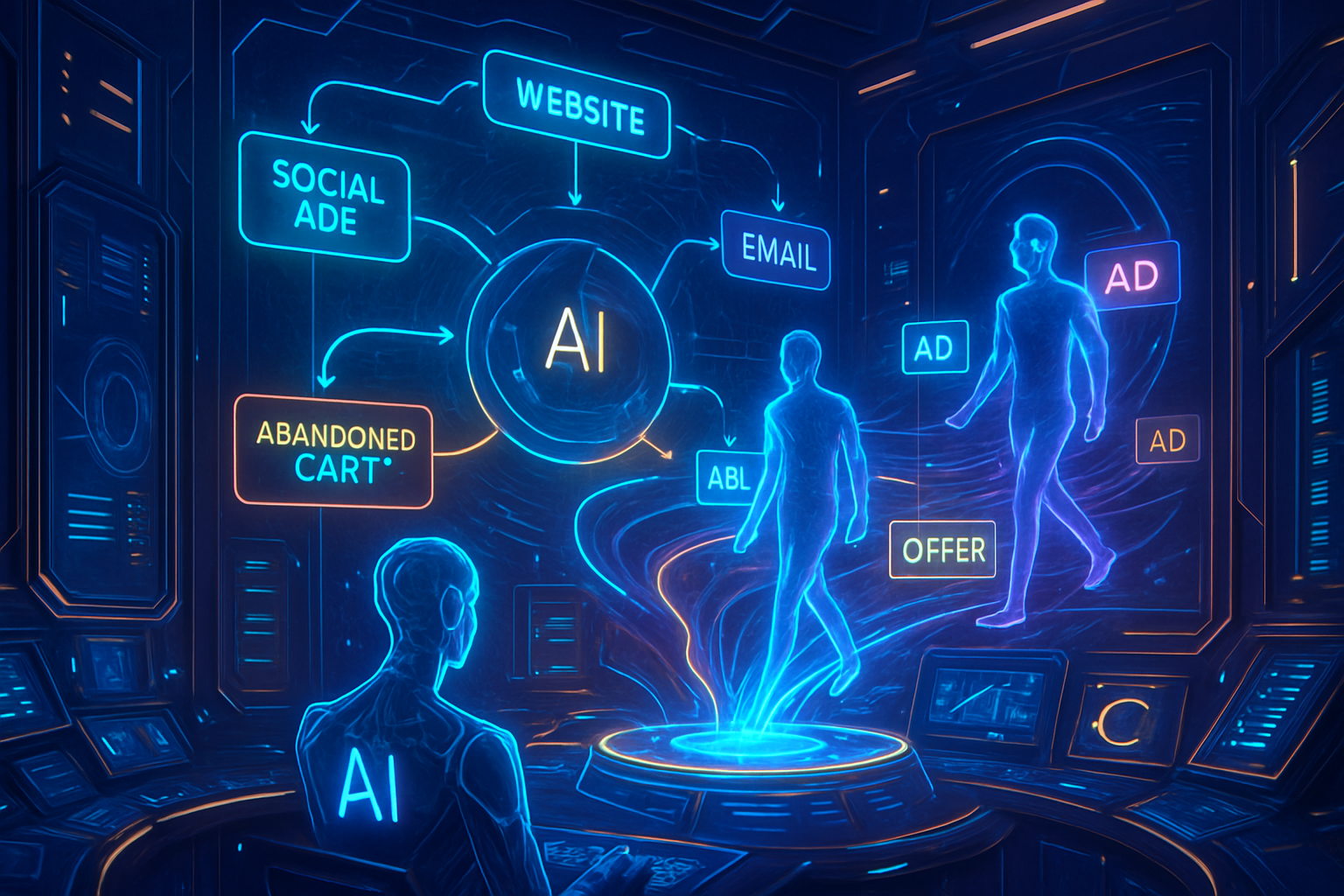
Imagine 97% of your website visitors leaving without buying. It’s like money walking away. But, what if you could get them back?
You’re about to learn about a game changer. It turns casual browsers into loyal customers. In today’s digital world, you need a strong marketing strategy. Marketing channels—various online and offline platforms used to promote a brand—play a key role in creating a seamless, customer-centric experience. This strategy reconnects you with people who already know your brand.

RapidLeads Pro uses AI to change how you deal with lost visitors. It’s not just about tracking cookies. We’re talking about advanced methods that use artificial intelligence and predictive analytics to boost your ROI.
The stats are clear. Retargeting strategies get 10x more clicks than regular ads. Also, 70% of customers buy after seeing targeted ads. Are you ready to make those missed chances into money?
Key Takeaways
97% of first-time visitors leave without purchasing, creating massive opportunity for reconnection
AI-powered targeting delivers 10x higher click-through rates than traditional display advertising
Strategic remarketing increases conversion likelihood by 70% through personalized messaging
Cross-channel integration amplifies campaign effectiveness across multiple touchpoints
Predictive analytics identify high-value prospects most likely to convert
Budget optimization ensures maximum ROI from every advertising dollar spent
Understanding Retargeting and Remarketing
Smart marketers know the magic happens after visitors leave your site. Most people don’t buy right away. They browse, compare, and think it over.
That’s where retargeting campaigns and remarketing come in. These strategies turn “almost customers” into real buyers. But, they’re not the same thing.

Knowing the difference makes your marketing efforts better. Tracking and analyzing user interactions is essential for creating effective retargeting campaigns and optimizing your marketing strategies. You reach people at the right time with the right message. This creates a smooth customer experience that guides them through their buying journey.
What Is Retargeting?
Retargeting uses display ads on websites and social platforms. It has a small code called a “pixel” that tracks visitor actions. Think of it as your digital memory system.
When someone visits your site, the pixel captures their user behavior. It notes which pages they viewed, how long they stayed, and what caught their attention. This data is gold for your future ads.
Social media retargeting uses data from pixels on your website from social platforms. Facebook, Instagram, and LinkedIn offer pixel tracking. The pixel follows visitors as they browse other sites and social feeds.
Retargeting is powerful because it reaches visitors who never gave you their contact info. It works by serving ads to users based on their previous engagement or website interactions, ensuring your brand stays visible to them across various platforms. This keeps your brand in their mind when they’re ready to buy.
What Is Remarketing?
Remarketing is about email-based re-engagement campaigns. It targets users who gave you their contact info. You already know who they are and can personalize your messages.
This strategy nurtures known contacts through direct communication. You send targeted emails based on their past interactions with your brand. The messages feel personal because they are personal.
Remarketing creates deeper relationships than retargeting alone. You can segment your email lists by purchase history, browsing behavior, or engagement level. Each segment gets tailored content that speaks to their specific needs.
The beauty of remarketing lies in its precision. You’re not casting a wide net hoping to catch fish. You’re having one-on-one conversations with people who already showed interest in your products.
Why Retargeting & Remarketing Are Game Changers
These strategies work together to create a complete customer re-engagement system. Retargeting captures anonymous visitors through behavioral tracking. Remarketing nurtures known contacts through personalized communication.
When you combine both, magic happens. You create multiple touchpoints that reinforce your brand message. This builds trust with people who showed initial interest but weren’t ready to buy.
Modern AI-powered lead scoring systems make this even more effective. They analyze user behavior patterns to predict buying intent. This means you can prioritize your most promising prospects automatically.
Data-driven ad optimization takes it further. The system learns which messages work best for different audience segments. It adjusts your campaigns in real-time for maximum impact.
Here’s why this matters for your business:
Higher conversion rates: You’re targeting warm prospects, not cold traffic
Better ROI: Your ad spend focuses on people already interested in your products
Improved customer experience: Prospects see relevant messages at the right time
Increased brand awareness: Multiple touchpoints keep you top-of-mind
The combination creates a seamless experience that guides prospects through their entire buyer’s journey. They see your display ads while browsing other websites. They receive personalized emails in their inbox. Every interaction moves them closer to a purchase decision.
This integrated approach doesn’t just increase sales. It builds lasting relationships with customers who feel understood and valued. That’s the real power of combining retargeting and remarketing strategies.
Building a Custom Audience: The Foundation of Success
Creating custom audiences makes your marketing more precise. It’s not just about collecting data. It’s about building relationships with people who already know your brand.
Think of building an audience like building a bridge. Every interaction is a building block. Every click tells a story. Targeting new users—such as first-time visitors—with personalized web push notifications and email offers can encourage engagement and conversions.
What Does It Mean to Build an Audience?
Building a custom audience means making groups of people based on their actions. You can target visitors who looked at your homepage but didn’t buy. You can reach people who left their shopping carts behind.
Your audience grows smarter with every interaction. It gets more precise as you understand your customers better.
Brands can make audiences based on website visitors, specific page views, or behaviors. You might target people who looked at your pricing page but not your checkout. Or focus on users who haven’t visited in 30 days.

Audience Creation & Segmentation
Smart segmentation makes your campaigns better. You start with basic segments like all website visitors. Then you get to more detailed categories.
High-intent browsers who spend over three minutes on product pages are great opportunities. Cart abandoners within specific price ranges need different messages than casual browsers.
Consider users who engaged with your content but haven’t converted in 30 days. These warm prospects need gentle nurturing, not aggressive sales pitches.
Advanced segmentation lets you create very specific audience groups. You can base segments on behaviors, engagement levels, and conversion scores. Facebook custom audiences show how to target well.
Audience Type | Behavior Pattern | Conversion Likelihood | Recommended Action |
|---|---|---|---|
High-Intent Browsers | 3+ minutes on product pages | High (65-80%) | Direct product ads with offers |
Cart Abandoners | Added items, didn’t purchase | Medium-High (45-60%) | Reminder ads with incentives |
Content Engagers | Read blogs, watched videos | Medium (25-40%) | Educational content first |
Dormant Visitors | No activity for 30+ days | Low-Medium (15-25%) | Re-engagement campaigns |
Gathering Valuable Insights with Google Analytics
Google Analytics helps you understand user behavior. You’ll find out which pages get the best leads. You’ll see what content people like.
The platform shows patterns that help your strategy. You can see when people are most likely to buy. You can find out what content gets people engaged.
Real power comes when you mix Google Analytics data with your CRM. This makes audience lists that update in real-time.
These valuable insights help you see where customers are in their journey. You can track from first visit to final purchase. You can find out where your funnel is blocked.
Your target audience becomes clearer as you analyze behavior. You learn to spot browsers and buyers. You find high-value prospects early.
CRM-driven workflows for audience creation take your targeting up a notch. You can segment customers by purchase history, engagement scores, and lifetime value. This improves your campaigns over time.
Cross-Channel Marketing Strategy: Reaching Them Everywhere
Today’s customers move around a lot online. They use many platforms and devices. Social media platforms, such as Facebook and Instagram, are key channels for retargeting campaigns and are widely used to re-engage potential customers. Your success comes from a cross channel marketing strategy that follows them everywhere.
When you do cross channel****marketing right, you have a unified message. It changes to fit each platform. This way, your message stays the same, but how you share it changes.

What Is Cross-Channel Marketing?
Cross channel marketing means all your marketing works together as one. It’s not about separate campaigns on different platforms. It’s about a smooth journey for your customers.
Imagine an orchestra. Each instrument plays its part, but together they make beautiful music. Your Google Ads, Facebook campaigns, and email all work together.
The big difference from multichannel marketing? Cross-channel marketing shares data between platforms. When someone clicks your Google Ad, that info goes to your Facebook and email.
Implement Cross Channel Marketing
To implement cross channel marketing well, start with your customer data platform. It’s like your control center where all customer actions are tracked.
Connect your Google Ads to your CRM system. When someone fills out a form from your ad, they go into your email and Facebook ads.
Use Facebook Pixel with your website analytics. This lets you show ads to people who visited your site. You can see their whole journey across multiple channels.
Make messages that fit each platform. Your main message stays the same, but it looks different on Google ads, Instagram, and in emails.
Real-World Example of Cross-Channel Tactics
Here’s how a full cross channel sequence works:
Sarah searches for “project management software” and clicks your Google Ad. She looks at your pricing page but doesn’t buy. Then, she gets a personalized email with a free trial offer.
That night, Sarah sees a Facebook ad with the software she looked at. The ad has customer reviews and a special offer.
Two days later, Sarah searches for comparisons. Your Google ad shows a guide comparing your software to others. When she downloads it, your CRM sends a WhatsApp message from your sales team.
This plan across multiple channels makes you 250% more likely to convert than single-channel campaigns.
Benefits of Cross-Channel Marketing
Good cross channel marketing does more than just sell more. You learn more about your customers by seeing how they act on different platforms.
It costs less to get new customers. You’re not trying to reach cold leads on every platform. You’re working with people who already know you.
Customers stick with you longer. Your integrated approach builds trust. It makes the sales process shorter.
Marketing Approach | Conversion Rate | Cost Per Lead | Customer Retention |
|---|---|---|---|
Single Channel | 2.3% | $45 | 23% |
Multi-Channel | 4.1% | $32 | 41% |
Cross-Channel | 7.8% | $18 | 67% |
Advanced Cross-Channel | 12.4% | $12 | 84% |
Being consistent online makes your brand more recognizable. People see you as reliable and professional.
You also get ahead of the competition. While they deal with scattered customer data, you see the whole picture.
This leads to better ROI, stronger customer ties, and growth that keeps getting better over time.
Developing Creative Strategies That Resonate
Creating creative strategies that connect is more than making ads. It’s about building meaningful relationships. Your creative approach turns your marketing goals into success stories.
The best retargeting campaigns don’t rely on luck. They use creative strategies to reach people who have shown interest in your products. This targeted approach makes every dollar count, driving engagement and conversions.
What Is a Creative Strategy?
A creative strategy is like a map for connecting with your audience. It’s more than picking colors or fonts for ads.
Your strategy makes your message hit home with different people at different times. It guides every visual, word, and call-to-action you make.
Think of it as the DNA of your ads. Every successful retargeting effort starts with a solid creative foundation. Without it, you’re just guessing.
3 Most Important Strategies for Creative Thinking
Modern retargeting success relies on three key creative strategies:
Emotional Resonance is the first pillar. You need to tap into feelings that drive purchases. Fear, desire for status, or need for security motivate more than logic.
Social Proof Integration is your second strong tool. People trust others more than brands. Showing how others have benefited from your solution builds credibility and reduces anxiety.
Urgency Creation is your third tool. You need to give people reasons to act now. Limited-time offers, exclusive deals, or scarcity messaging push people to decide.
AI chatbots and AI calling systems enhance these strategies. They deliver personalized messages at scale. These tools analyze user behavior to find the best creative approach for each person.
“The best marketing doesn’t feel like marketing. It feels like a helpful friend making a timely suggestion.”
A/B testing is key to validating your creative decisions. You can’t rely on gut feelings. Test different elements to find what works best.
Example of a Winning Creative Strategy
Here’s how a successful creative strategy works:
Smart retargeting adapts to each user’s situation. A cart abandoner might see an ad with testimonials and a discount.
The creative elements change in real-time. Time of day, device type, and previous engagement patterns influence the message.
For example, a fitness equipment retailer noticed that users interested in home gym equipment respond well to social proof in the evenings. Their AI system serves testimonials from busy professionals who work out at home after work.
During lunch, the same audience gets ads about quick workouts. Weekend messaging is about family fitness. This personalization boosts their conversion rates.
The key is to make an impact with simple designs and clear calls-to-action. Simple designs with clear calls-to-action consistently outperform cluttered, text-heavy advertisements. Your message should be clear in three seconds.
AI-powered personalized content creation takes this further. These systems analyze data to predict which creative elements will drive engagement for each user. This ensures your creative strategy delivers the best return on investment.
Advanced Retargeting Techniques That Boost Conversions
AI is changing how we retarget customers. It predicts what they want before they do. This is more than just tracking cookies. It’s about understanding patterns and delivering the right message at the right time.
The best marketers today don’t just chase customers. They meet them at the perfect moment with the perfect message. This happens when you mix AI with deep customer insights.
AI and Machine Learning for Retargeting
AI makes retargeting smarter. It doesn’t wait for customers to act. Instead, it uses machine learning to guess their next move.
AI looks at everything from how people browse to when they engage. It spots tiny signals that humans might miss. These systems learn from every click, scroll, and pause to get to know customers well.
AI finds patterns in customer behavior. It knows who’s likely to buy and when. This helps you spend your budget wisely.
“AI doesn’t replace human creativity in marketing; it amplifies it by providing insights that were previously impossible to discover.”
Predictive Ad Targeting Based on Buyer’s Journey
Predictive targeting knows where each customer is in their journey. It’s not like old retargeting that shows the same ads to everyone. It knows exactly what each customer needs.
Here’s how predictive targeting works at each stage:
Awareness stage: Serves educational content and brand introduction ads
Consideration phase: Delivers comparison guides and feature demonstrations
Decision moment: Presents testimonials, guarantees, and purchase incentives
Post-purchase: Offers complementary products and loyalty programs
It looks at customer data to find buying signals. It knows when someone is serious about buying. This means you can serve ads that match their mood perfectly.
Timing is key in the buyer’s journey. AI finds the best times to reach out. It knows when people are most open to messages.
Hyper-Personalization Using Customer Data
Hyper-personalization makes each ad unique for each person. It’s more than just adding names to ads. It’s about creating whole campaigns based on what each person likes.
The process starts with collecting lots of data. Every interaction is important. This includes website visits, email opens, and more.
Advanced personalization considers many things at once:
Device preferences and usage patterns
Time of day and browsing habits
Geographic location and local trends
Purchase history and product interests
Engagement style and content preferences
This makes ads feel natural, not intrusive. A busy person might see quick ads on their phone. A research person might get detailed content on their laptop.
This level of personalization really boosts sales. People respond well when ads match their needs.
Retargeting Across Devices
Cross-device retargeting follows customers everywhere. People use many devices every day. Your ads should follow them too.
Tracking devices creates a single profile for each customer. So, if someone looks at products on their phone, they might see ads on their laptop later. This keeps the conversation going without being repetitive.
Effective cross-device strategies include:
Progressive messaging that builds across touchpoints
Device-optimized creative formats and sizing
Contextual timing based on device usage patterns
Unified frequency capping to prevent oversaturation
It needs advanced tracking systems. With third-party cookies gone, server-side tracking is key. It keeps user identity across devices while following privacy rules.
Cross-device insights show new customer behaviors. You learn which devices people use for research and buying. This helps you make ads more effective at every touchpoint.
The future belongs to marketers who use these advanced techniques. AI, predictive targeting, hyper-personalization, and cross-device strategies create magical marketing experiences for customers.
Budget Optimization: Maximize Every Dollar Spent
Budget optimization is not about spending less. It’s about spending smarter. This way, every dollar you spend helps your ad campaign do better.
Smart marketers don’t just set a budget and hope. They use a plan that changes based on how well things are doing. This plan focuses on the best ways to make money.
What Is Budget Optimization?
Budget optimization means using your marketing money wisely. It’s about looking at how well your campaigns are doing. Then, you decide where to spend more.
This isn’t just about saving money. It’s about finding the best ways to make money and growing them. You’re making your ad spend work harder with smart choices.
Today, budget optimization uses tools like real-time analytics and machine learning. These tools help adjust your spending to get the best results. They make sure your money goes to the campaigns that are working best.
70-20-10 Rule for Marketing Budget
The 70-20-10 rule helps you plan your marketing budget. It balances keeping things steady with trying new things. This way, you get good results and explore new chances.
Seventy percent of your budget goes to campaigns that already work well. These are your reliable campaigns that always bring in good results.
Twenty percent is for making your successful campaigns even better. You’re not starting over. You’re just making small changes to see if you can do even better.
The last ten percent is for trying new and different things. This is where you can test new ideas and see if they work.
“The 70-20-10 rule helps you not put all your eggs in one basket. But it also lets you grow what works.”
Real-Time Budget Adjustments
Real-time budget adjustments make your ad campaigns better. You make changes right away, based on how things are doing. This way, you’re always improving your campaigns.
Advanced platforms use machine learning to understand your audience better. They know when mobile users are more likely to buy. So, they spend more on mobile ads during those times.
This way, your budget is used more wisely. You’re spending on the best times and people. This means you’re not wasting money on things that don’t work.
The technology keeps an eye on how well your ads are doing. Every change is based on real data. This means every dollar you spend helps your business grow.
Real-time optimization means your campaigns get better faster than your competitors. While others wait for reports, you’re already making the most of new chances. You avoid spending on things that don’t work well.
Nurturing Existing Customers with Retargeting
Most companies focus on new customers. But, your existing customers are where the real value lies. They already trust your brand and are ready for more.
Smart retargeting turns one-time buyers into loyal fans. It’s all about understanding their journey and giving them personalized experiences.
Why Existing Customers Are Gold
Your existing customers are five times more valuable than new ones. They buy faster, spend more, and need less convincing. The numbers show it’s true.
Past customers spend 67% more than first-time buyers. They trust your product and service. This trust leads to higher conversion rates and more value over time.
“It costs five times more to acquire a new customer than to retain an existing one.”
Harvard Business Review
Fashion Nova saw a 90% repeat purchase rate with smart retargeting. They focused on past customers, not just new ones. This saved money and boosted revenue.
Loyal customers also help market your brand. They share recommendations and refer friends. This growth multiplies your efforts.
Cross-Selling & Upselling with Retargeting
Cross selling through retargeting needs smart thinking. Amazon does this by suggesting items that go well with what you’ve bought.
When someone buys a camera, Amazon suggests memory cards and more. This boosts their average order by 35% and adds value.
CRM integration makes cross-selling even better. It tracks what customers buy and how they interact. This helps find the best upselling moments.
Timing is key for cross-selling campaigns:
Software accessories within 48 hours of hardware purchases
Seasonal items based on previous year’s buying patterns
Upgrade offers when current subscriptions near renewal
Complementary services after major purchases
Focus on relevance, not just volume. One well-timed suggestion can beat ten random ads. Choose items that enhance their original purchase.
Loyalty & Retention Strategies
Retargeting can build customer engagement beyond just selling. Create ongoing value that strengthens your bond with customers.
Give exclusive offers to your most loyal customers. Early access, special discounts, and VIP treatment make them feel special. These perks cost little but build a lot of goodwill.
Educational retargeting campaigns are great for keeping customers. Show them how to get more from what they’ve bought. This makes your brand seem helpful, not pushy.
Milestone celebrations create emotional bonds with customers. Celebrate purchase anniversaries and other milestones. These personal touches turn transactions into emotional connections.
Smart retention strategies include:
Predictive re-engagement – Identify customers showing declining activity
Personalized content – Deliver relevant information based on purchase history
Seasonal reminders – Timely suggestions for recurring needs
Feedback loops – Ask for opinions and act on suggestions
The best loyalty programs use retargeting to stay in touch. Regular communication keeps your brand in mind without overwhelming customers. Mix promotional messages with valuable content to enrich their experience.
Remember, customer engagement is a long-term effort. Build relationships slowly with consistent value. Your existing customers will thank you with more spending and referrals.
Email Campaigns & Retargeting: The Power Pair
When you mix email campaigns with retargeting, you make a strong team. This team helps guide people to buy more. You’re building an unstoppable conversion machine that keeps your message strong.
Email marketing is like telling stories and teaching. Retargeting ads are like quick reminders. They pop up when people are browsing.
This team effort boosts email opens by 42% and clicks by 58%. Prospects see the same message everywhere. It makes them more likely to buy.
Crafting Effective Email Campaigns
Good email campaigns for retargeting need to know each part’s role. Your emails are the base for deeper connection. They share product details and build relationships.
Email retargeting sends messages to those who showed interest but didn’t buy. This strategy catches warm leads who need a little push to buy.
Automated workflows make this easier and better. You can set up triggers for different actions:
Email opens without clicks trigger reminder campaigns
Clicks to specific pages initiate targeted product sequences
Abandoned carts activate recovery email series
Purchase completions start cross-sell campaigns
WhatsApp adds a new layer to your marketing. It’s for quick, personal chats. Customers reply 3x faster to WhatsApp than emails.
“The future of marketing is not about choosing between channels, but about orchestrating them to create seamless customer journeys.”
Email + Ad Sync for Maximum Impact
Email campaigns and retargeting ads work together. When you open an email, you might see ads later. It keeps your brand in mind.
This works both ways. Ad clicks can start email sequences. Email actions can start ad campaigns. This creates a feedback loop that maximizes customer engagement at every stage.
Here’s how it works in real life:
Customer receives abandoned cart email
Email open triggers social media retargeting ads
Ads feature customer reviews of abandoned products
Search retargeting activates when they research alternatives
WhatsApp follow-up provides immediate assistance
This multi-channel approach makes sure your message gets to everyone. You’re meeting customers where they are, when they’re ready to engage.
The secret to success is keeping your message the same everywhere. Your emails and ads should work together. When customers see the same message everywhere, they trust you more.
Measuring Retargeting Success
Your retargeting campaigns give you lots of data. But, only the right numbers show how well you’re doing. Success isn’t just about how many people see your ads or click on them.
You need a system that tracks every step your customers take. This turns raw data into actionable intelligence that helps your business grow.
It’s important to know which data points really matter. Smart marketers look at numbers that show how much money they make and how long customers stay with them.
Key Metrics to Watch
Conversion rate is key to knowing if your ads work. It shows how many visitors become customers.
Watch your cost per acquisition (CPA) for different groups. This tells you which groups give you the best return on investment. Audience based analysis helps you spend your budget wisely.
Click-through rate (CTR) tells you if your ads are good and if people like them. A high CTR means your message hits the mark.
Customer lifetime value (CLV) shows the lasting effect of your ads. It helps justify spending more on valuable customers.
See how people move through your sales funnel. Track how retargeted users go from knowing about your product to buying it. These valuable insights show where you can improve.
Metric Category | Key Indicators | Optimization Focus | Measurement Frequency |
|---|---|---|---|
Conversion Metrics | Conversion Rate, CPA, ROAS | Campaign Performance | Daily |
Engagement Metrics | CTR, Time on Site, Pages per Session | Creative & Targeting | Weekly |
Customer Value | CLV, Repeat Purchase Rate, AOV | Long-term Strategy | Monthly |
Attribution Metrics | View-through Conversions, Cross-device Performance | Channel Allocation | Weekly |
Use Google Analytics & Attribution Tools
Google Analytics is your main tool for tracking retargeting. Use enhanced ecommerce tracking to get detailed data on conversions.
Create custom audiences in Google Analytics to gather data on specific user actions. These segments show how different groups react to your ads.
Attribution modeling shows which ads lead to the most sales. Use data-driven attribution to see the whole customer journey across devices and channels.
Server-side tracking solutions like Cometly give accurate data even as privacy rules change. This tech lets you capture all data points no matter the browser or cookie rules.
Real-time dashboards let you make changes fast. Spotting issues or opportunities means you can act quickly, not wait for weekly reports.
Cross-device attribution shows how customers move between devices during their buying journey. This insight helps you budget better for each device.
Advanced analytics platforms mix your own data with outside insights. This gives you a full picture of customer behavior and how your campaigns perform.
For more on tracking your campaign success, check out our detailed guide on remarketing metrics and measuring campaign success.
Set up alerts for important performance levels. If numbers drop, you’ll get a quick alert to fix things.
Do regular checks to make sure your tracking is right and complete. Review your setup every month to find areas to improve.
Common Mistakes to Avoid
Your retargeting strategy might be hurting your success without you knowing it. Even experienced marketers make these costly mistakes. These errors waste budgets and harm your brand’s reputation.
Winning or losing ad campaigns often depends on avoiding these mistakes. Smart businesses learn from others’ failures. They avoid making the same expensive errors.
Let’s look at the three biggest pitfalls that hurt retargeting effectiveness. We’ll also talk about how to fix them.
Over-Saturation & Ad Fatigue
Showing the same ads too much can backfire. Site visitors who see your ad many times might ignore it or feel negatively about your brand.
Ad fatigue happens quickly. Studies show that conversion rates drop by 37% after seeing the same ad five times. What was once helpful becomes annoying.
Use frequency capping to avoid this disaster. Limit how often each person sees your ads. Start with 3-5 impressions per day and adjust as needed.
Quality is more important than quantity. Focus on making compelling, varied ads. Change up your messages, images, and offers to keep people interested.
Watch your engagement metrics closely. If click-through rates fall and cost-per-click rises, it’s time to refresh your ads or give people a break.
Poor Audience Segmentation
Treating all website visitors the same is a waste of money. People who looked at your pricing page need different messages than those who read a blog.
Specific users have unique needs and interests. Generic ads fail to meet these needs, leading to low conversion rates and high costs.
Create detailed audience segments based on user behavior. Separate first-time visitors from returning customers. Distinguish between people who browsed products and those who compared them.
Here’s how to segment well:
Product viewers who spent 30+ seconds on specific pages
Cart abandoners who added items but didn’t purchase
Content readers who engaged with educational materials
Pricing page visitors showing high purchase intent
Existing customers ready for upsells or cross-sells
Each segment needs its own message. Product viewers need social proof and benefits. Cart abandoners need urgency and incentives.
Ignoring Cross-Device Behavior
Modern consumers switch between devices often. They research on mobile and buy on desktop.
Ignoring this can create confusing experiences. Your mobile ad might target someone who already bought on desktop, wasting money and annoying them.
Cross-device tracking connects different touchpoints. It shows the whole customer journey across devices. This data helps you see how well your campaigns are doing.
Here are some strategies for cross-device tracking:
Use unified customer identifiers across all platforms
Create device-specific creative optimized for each screen size
Adjust bidding based on device performance data
Exclude recent converters across all devices
Privacy laws add complexity to cross-device tracking. GDPR and CCPA require clear consent for data collection. Build transparent opt-in processes that explain how data is used.
Server-side tracking helps keep data accurate while following privacy laws. It reduces reliance on third-party cookies and gives more reliable data for cross-device attribution.
Mistake Category | Warning Signs | Quick Fix | Long-term Solution |
|---|---|---|---|
Ad Fatigue | Declining CTR, Rising CPC | Reduce frequency caps | Create diverse creative assets |
Poor Segmentation | Low conversion rates | Split broad audiences | Behavior-based targeting |
Cross-Device Issues | Duplicate conversions | Enable device linking | Unified tracking system |
Privacy Violations | Legal compliance warnings | Update consent forms | Server-side implementation |
Privacy mistakes can cost a lot. GDPR fines can be up to 4% of annual revenue. CCPA penalties start at $2,500 per violation. These costs are much higher than any short-term gains from aggressive tracking.
Start with privacy-first retargeting systems. Use first-party data whenever you can. Make sure users understand your consent mechanisms.
Regular audits help avoid compliance issues. Check your data collection practices every quarter. Update your privacy policies when laws change.
Different channels have different privacy rules and technical limits. What works on Facebook might not work on Google. Stay up to date with platform-specific rules and updates.
The key to avoiding these mistakes is to keep monitoring and optimizing. Set up alerts for performance drops. Test new approaches often. Learn from data, not assumptions.
Remember, retargeting success comes from respecting your audience and delivering value. Avoid these common pitfalls, and your campaigns will do better at lower costs.
The Future of Retargeting & Privacy Compliance
The end of third-party cookies is a big change. It’s making customer relationships better. This change is not just about following rules. It’s about building trust that helps your business grow.
Your online store’s success now relies on privacy-first strategies. Smart marketers are moving away from old tracking methods. They’re making direct connections with people who want to hear from them.
Navigating Privacy Changes (Worldwide & USA-specific Laws)
GDPR changed everything in 2018. CCPA came in 2020. Now, America has state-level privacy laws too.
You need to know how these laws affect your business. Being open about data use is key. When customers trust you with their data, they’re more likely to share it.
Here’s what compliance looks like in practice:
Clear consent mechanisms that explain data usage
Easy opt-out options that respect customer choices
Data minimization that collects only what you need
Regular audits that ensure ongoing compliance
Your sales funnel gets stronger with permission-based marketing. Customers who choose to engage convert better. They also stay loyal longer.
Privacy-friendly retargeting strategies focus on value exchange. You offer something meaningful. Customers share their information willingly.
Cookieless Retargeting & Server-Side Tracking
Third-party cookies are disappearing. Safari and Firefox already block them. Chrome is following suit.
Server-side tracking fills this gap perfectly. Your data collection becomes more accurate and reliable. Browser restrictions can’t interfere with server-to-server communication.
First-party data becomes your goldmine. This includes:
Email addresses from newsletter signups
Purchase history from your online store
Preferences shared through surveys
Behavioral data from your website
Zero-party data takes this further. Customers explicitly tell you their preferences. They share what they want to buy. This information powers incredibly precise targeting.
Your business thrives when you combine these approaches. Server-side tracking captures accurate data. First-party relationships provide rich insights. Zero-party data reveals true intentions.
The future belongs to businesses that view privacy as an opportunity. You’re not just collecting data—you’re building relationships. You’re not just targeting audiences—you’re serving customer needs.
Smart marketers are already preparing for this cookieless world. They’re investing in customer data platforms. They’re creating value-driven content that encourages data sharing. They’re building new audiences based on trust and mutual benefit.
Your retargeting success depends on this mindset shift. Privacy compliance isn’t a limitation. It’s your pathway to deeper customer connections and sustainable business growth.
Conclusion: The Retargeting Game Has Changed
Your retargeting strategy is key in today’s market. It decides if you lead or follow. The move from simple tracking to AI-powered insights opens new doors for businesses.
RapidLeads Pro changes how you reach your audience. It uses smart algorithms and plans your ads well. This way, you see better results in sales and keeping customers.
Smart businesses know retargeting is more than ads. It’s about building strong customer relationships. Your goal should be to offer helpful, personal experiences, not just ads.
The leaders in retargeting treat each person as unique. They use privacy-safe data and adjust fast to meet customer needs. This approach was once thought impossible.
It’s time to start using these new methods. Begin with clear audience groups, then plan your ads across different channels. Use AI to guess what customers want before they ask. The game has changed, and you must play by the new rules.
FAQ
What’s the difference between retargeting and remarketing?
Retargeting uses ads on websites and social media. It tracks visitors who haven’t given their info. Remarketing sends emails to people who have shared their contact details. Together, they help you reach both known and unknown visitors.
How do I create effective custom audiences for my retargeting campaigns?
Start with basic groups like page visitors. Then, get more detailed based on how they act. Use Google Analytics to see patterns in user behavior.
Integrate this data with your CRM to make audience lists that update in real-time.
What is cross-channel marketing and why is it important for retargeting?
Cross-channel marketing talks to people in many ways at once. It uses Google Ads, Facebook, and more. This way, you reach people in their favorite ways, increasing chances of a sale.
How can AI and machine learning improve my retargeting campaigns?
AI makes your ads smarter by understanding what users might do next. It creates ads just for each person. This means ads that fit perfectly with what each user likes.
What’s the best way to allocate my retargeting budget for maximum ROI?
Spend 70% on what works well, 20% on improving what’s good, and 10% on new ideas. Use real-time data to adjust spending as needed. This way, you spend more on times when you get more sales.
Why should I focus retargeting efforts on existing customers?
Existing customers buy more and trust you more. They’re your best chance for more sales. Use what they’ve done to suggest more things they might like.
How do I coordinate email campaigns with my retargeting ads?
Make emails and ads work together. Emails tell stories, while ads remind people quickly. This makes people more likely to open emails and click ads.
What key metrics should I track to measure retargeting success?
Watch conversion rates, how much it costs to get a customer, and how much they spend over time. Use Google Analytics to see which ads work best. This helps you make better decisions.
What are the most common retargeting mistakes to avoid?
Don’t show the same ad too much. It can make people ignore your ads. Don’t treat all visitors the same. Use smart ways to show ads based on what people are interested in.
How do privacy changes affect retargeting and how can I adapt?
With new privacy rules, focus on ads that don’t use cookies. Get people to share their info willingly. Be open about how you collect data and respect people’s choices.
How can I retarget users across different devices effectively?
Make sure ads follow people from phone to computer. Track what they do on each device. This keeps your message consistent and natural.
What role does customer data play in advanced retargeting strategies?
Good data lets you target people based on what they do. Use it to find out what leads are best and what content people like. This helps you make ads that really speak to people.
How do I create compelling retargeting campaigns for my online store?
Make ads for people who looked at specific products. Use testimonials and special offers to grab their attention. Show them items they liked and remind them to buy.
