




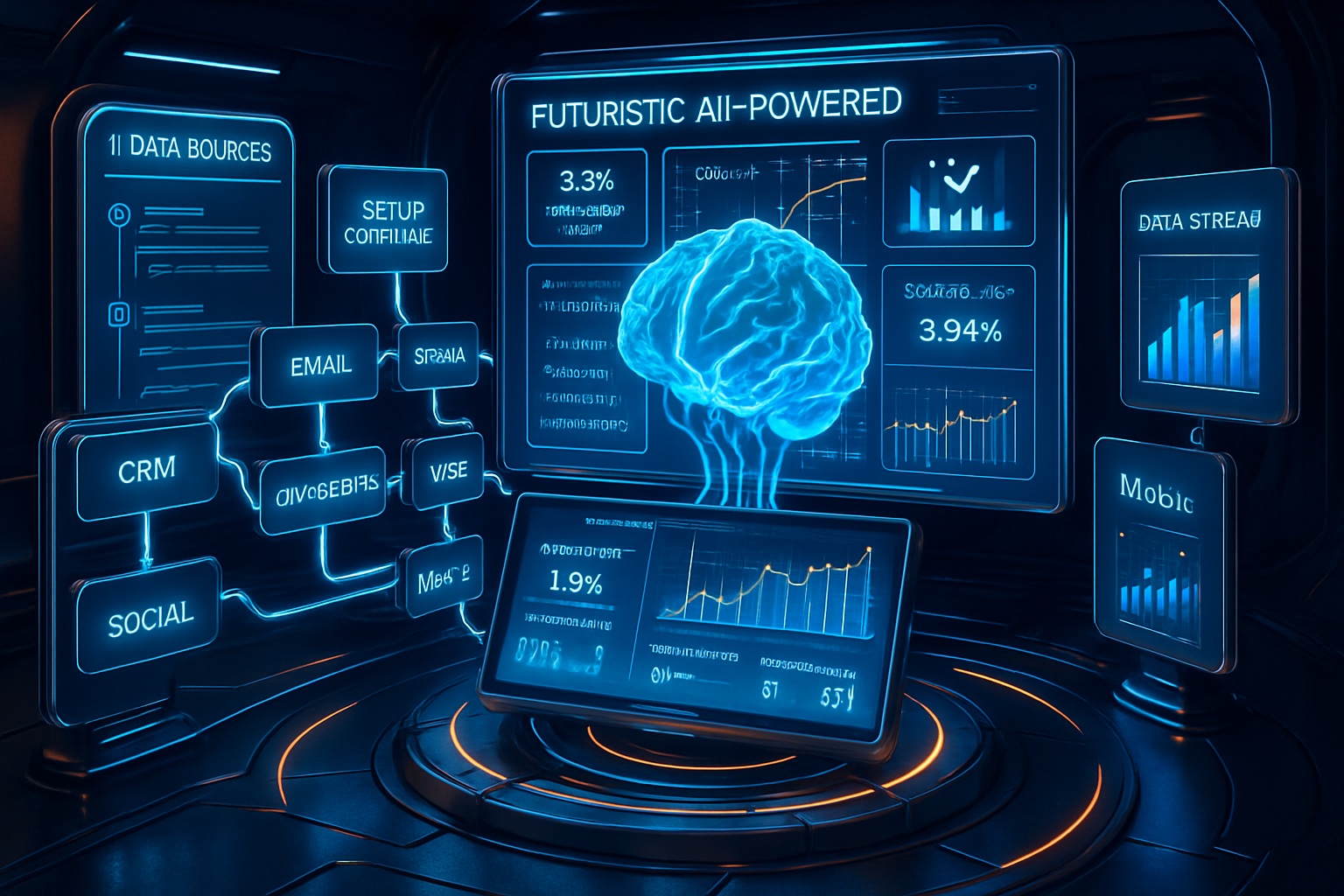
You’re about to learn how to use game-changing power of instant data insights. This guide is not just another tech lesson. It’s your way to turn raw data into money-making choices.
If you run a startup or lead a big company, you face the same big question. How can you make quick, smart choices for your campaigns? Old ways of reporting take too long, leaving you waiting.

Streaming analytics is a game-changer. With RapidLeads Pro’s AI, your data is processed right away. You get fast feedback on how customers act and how your campaigns do. Users, such as marketers and marketing professionals, can leverage these real-time insights to make quick decisions and optimize their campaigns based on up-to-the-minute data.
No more guessing or missing chances. You’ll get proven strategies to increase sales and lead your market. Are you ready to learn the secrets of top businesses?
Key Takeaways
Instant data processing eliminates waiting time for campaign insights
AI-powered automation transforms raw information into actionable decisions
Streaming analytics provides immediate feedback on customer behavior patterns
Smart dashboards help you adjust campaigns while they’re running
Data engineers can build systems that give your business competitive advantages
Real-time insights boost conversion rates and revenue faster than traditional methods
Why Real-Time Marketing Analytics Matters
Speed is key in today’s marketing world. Your rivals are making quick decisions with data driven decisions. You’re stuck waiting for yesterday’s reports.
In the fast-paced digital world, waiting too long for campaign performance insights is a big mistake. Real-time analytics lets you see what works right now.
Here’s a shocking fact. Over 80% of marketers want to use analytics for quick actions. But only 22% are actually good at it.

This gap is a huge chance. Spotting bad ads and finding top audiences fast lets you change your marketing efforts before losing money.
The winners today aren’t always the ones with more money. They’re the ones making quick, smart decisions with real-time marketing analytics.
Think about what happens when you can adjust strategies fast:
Stop wasting money on bad ads in hours, not days
Grow successful campaigns fast when you see what works
Beat competitors before they take over
Use trending topics while they’re popular
This change makes a huge difference in your marketing. You go from reacting to acting, from guessing to knowing, from hoping to winning.
Traditional Analytics | Real-Time Analytics | Business Impact |
|---|---|---|
Weekly performance reports | Live dashboards with instant updates | Faster decision making |
Historical data analysis | Current moment insights | Improved campaign effectiveness |
Delayed budget adjustments | Immediate spend optimization | Reduced wasted ad spend |
Reactive strategy changes | Proactive market responses | Competitive advantage |
Real-time business intelligence is more than saving money. It’s about grabbing every chance as it comes.
With quick feedback on your campaigns, you can change fast and boost sales. Being quick is your secret weapon in a busy market.
The real question is, can you afford to wait for real-time analytics? Every delay lets your rivals get ahead with better insights.
What Is Real-Time Marketing Analytics? (Clear Definitions)
Real time analytics is like your business’s nervous system. It senses, processes, and responds to what’s happening around you. Unlike old methods, it gives you a live score of your marketing.
It captures and checks data as it comes in from many places right away. Every click, conversion, and customer talk becomes part of your data stream right away. This turns numbers into useful insights fast, not slow.

Speed: Old analysis looks at data in chunks, hours or days later
Freshness: Real-time systems process data as soon as it comes in
Response time: You can act on trends and changes right away
Accuracy: No delays mean no old info messing up your choices
The magic comes from four key parts working together. Each part builds on the last to give your business the most value.
Data Collection is the start. Your tools get info from websites, social media, emails, and customer touches. This makes a steady flow of streaming data for your analytics.
Instant Data Processing turns raw info into useful patterns. Smart algorithms look for trends, figure out metrics, and find chances as data comes in. Exploratory data analyses help understand and process incoming data, determining necessary data transformations before storage or visualization. No waiting or batch delays.
Live Dashboards and Alerts keep you updated without always watching. Visuals show key numbers changing in real-time. Alerts tell you when big things happen or odd patterns show up.
Actionable Insights finish the loop by making info into clear steps. The system shows what’s important and suggests actions to get better.
It’s like driving with GPS versus an old map. One keeps you on track with current info, the other doesn’t. Real-time marketing analytics keeps you up-to-date with the latest data.
This method changes how businesses get to know their customers and the market. You don’t guess what worked last month. You know what’s working now.
The 7-Step Process to Set Up Real-Time Marketing Analytics
Your journey to real-time marketing success starts with a methodical setup process. This process connects every data point to your bottom line. It transforms scattered information into a competitive advantage that drives measurable results.
Success with real-time analytics depends on four essential elements. You need to collect data, process it instantly, have live dashboards with alerts, and get actionable insights. Data engineers design data pipelines to process real-time information from multiple sources seamlessly.
Here’s your blueprint for building an analytics powerhouse that actually works. Each step builds on the previous one, creating an enterprise data system that turns information into profit.

Step 1 — Define Clear Business Goals and KPIs
Start with laser-focused goal setting that aligns with your revenue targets. You need crystal-clear key performance indicators that move the needle, not vanity metrics that look impressive but don’t impact your bottom line.
Your KPIs should connect directly to business outcomes. Focus on metrics like customer acquisition cost, lifetime value, conversion rates, and revenue per visitor. These key performance indicators become your North Star for every analytics decision.
Document your goals before touching any technical setup. This foundation prevents you from drowning in data that doesn’t matter. Smart businesses choose three to five primary KPIs that drive their growth strategy.
Step 2 — Choose the Right Data Sources
Strategic data source selection determines your analytics power. You’ll collect information from mobile devices, social platforms, IoT sensors, and cloud applications. Each source provides unique insights into customer behavior.
Modern businesses tap into diverse data streams. Website analytics, email campaigns, social media engagement, and mobile app interactions all feed into your system. Smart data sources include both first-party and third-party information.
Prioritize data quality over quantity. Clean, reliable data sources outperform massive datasets filled with errors. Your data engineers will thank you for choosing well-structured sources that integrate smoothly.
Step 3 — Build the Data Pipeline Architecture
Your data pipeline architecture becomes the backbone of real-time analytics success. This infrastructure handles massive volumes without breaking under pressure. Bulletproof architecture scales with your business growth.
Design your data pipeline to process streaming information continuously. The architecture must handle peak traffic loads while maintaining speed and accuracy. Well organized data pipelines****create your competitive advantage in the marketplace.
Focus on scalability from day one. Your data pipelines should accommodate future growth without complete rebuilds. Smart architecture decisions today prevent costly migrations tomorrow. It’s also crucial to specify the destination in your data pipeline architecture to ensure that transformed data is delivered to the correct repository or storage location for analysis or further processing.
Step 4 — Transform and Process Data
Raw data chaos becomes organized insights through smart data transformations. This step converts messy information into clean, actionable formats that drive business decisions. Data processing turns noise into signal.
Your transformation layer standardizes formats, removes duplicates, and enriches information with additional context. These data transformations ensure consistency across all your analytics tools and reports.
Implement real-time processing capabilities that update insights instantly. Batch processing delays decision-making, while streaming transformations keep you ahead of market changes.
Pipeline Component | Primary Function | Key Benefits | Technical Requirements |
|---|---|---|---|
Data Ingestion | Collect from multiple sources | Comprehensive data capture | API integrations, streaming protocols |
Data Processing | Clean and transform information | Consistent data quality | ETL tools, validation rules |
Data Storage | Store processed information | Fast query performance | Cloud databases, data warehouses |
Analytics Engine | Generate insights and alerts | Real-time decision support | Machine learning, statistical models |
Remember that your data pipeline architecture must support both current needs and future expansion. Successful businesses invest in flexible systems that adapt to changing requirements without major overhauls.
Batch vs. Real-Time Processing: What Marketers Need to Know
Understanding the difference between batch processing and real-time processing is essential for any marketer aiming to harness the full power of data analytics. These are the two main types of data processing, and each serves a unique purpose in your marketing strategy.
Batch processing is all about handling large volumes of data at scheduled intervals. Think of it as collecting all your campaign data throughout the day and then running your analysis overnight. This approach is typically used for tasks like monthly accounting, historical performance reviews, or when you need to process data that doesn’t require immediate action. Batch processing is cost-effective and efficient for analyzing trends over time, but it doesn’t provide instant feedback.
On the other hand, real-time processing—the backbone of streaming analytics—analyzes and processes data as soon as it arrives. This means you can monitor campaign performance, track customer interactions, and respond to changes the moment they happen. Real-time analytics is crucial for applications where immediate insights are needed, such as monitoring financial transactions, detecting abnormal behavior, or optimizing live campaigns.
Processing Type | When to Use | Key Benefits | Typical Use Cases |
|---|---|---|---|
Batch Processing | Scheduled intervals (e.g., nightly) | Handles large data sets efficiently | Monthly accounting, trend analysis |
Real-Time Processing | As data arrives | Instant insights and response | Streaming analytics, live campaign performance, fraud detection |
Choosing the right processing method depends on your business goals and the types of data you’re working with. For marketers who need to react quickly to customer behavior and campaign performance, real-time processing is a game-changer. For those focused on long-term trends and historical analysis, batch processing remains a reliable tool. The most successful businesses often use a hybrid approach, leveraging both methods to maximize insights and performance.
Real-World Tools for Real-Time Marketing Analytics
Smart marketers use top tools to get real-time insights from multiple sources. The best platform turns mixed data into useful info that boosts sales.
Google Analytics 4 is a leader with machine learning skills. It finds important info from your website, apps, and offline actions. It shows which customers might buy next week.
Cometly changes how we track where sales come from. It shows which steps lead to buying. No more wondering which ads work.
Salesforce Einstein uses AI to find top customers for you. It spots valuable customers before others do. It looks at customer actions in real-time.
Marketo Engage starts campaigns right when someone acts. If someone downloads a whitepaper, it sends a special message. This happens fast, not slow.
Big tools power these platforms. Apache Kafka handles lots of data at once. Apache Flink works on data quickly.
Apache Spark is the main tool for big data. It works on data from social media, emails, and apps. These tools work well together.
Camphouse gives you all marketing analytics in one place. You can see how campaigns do without switching apps.
When these systems work together, they show clear business info. Modern marketing analytics tools help you make choices based on what’s happening now.
These tools handle lots of data from many places. They help you track social media and sales patterns. The right tools give you insights when you need them.
Actionable Insights That Drive Business Growth
Smart businesses turn data into actionable insights that increase revenue. They don’t just collect data. They find patterns that help make decisions.
Your analytics system should find chances and dangers fast. It looks at large volumes of customer data. It finds out how many customers might leave and which products are popular.
It also finds where your best customers spend their time. This helps a lot.
Smart alerts tell you right away when financial transaction patterns change. They also alert you to abnormal behavior. These alerts are important because they show where you can make more money.
The best companies use these data sets to guess how much customers will spend. They find chances to sell more. They stop losing money before it’s too late.
“60% of business leaders report marked increases in customer retention thanks to real-time data analytics.”
Real-time insights show which ways to reach customers work best. You can move money from failing campaigns to ones that work. This is not just guessing. It’s actionable analytics turning insights into results.
Your system should warn you when sales slow down or when customers start to engage more. These are chances to grow that won’t last long. Businesses that act quickly do better than those who wait for monthly reports.
The aim is not just to have more data. It’s to make smarter choices. Every insight should lead to a specific action that grows your business, saves money, or makes customers happier.
Campaign Performance Optimization in Real Time
Optimizing campaign performance is no longer a waiting game. With real time data and analytics, marketers can monitor every aspect of their campaigns as it happens, allowing for immediate adjustments that drive better results.
Real time analytics empowers you to fine tune your campaigns on the fly. As performance data streams in, you can spot which ads are resonating, which channels are underperforming, and where your budget is making the biggest impact. This level of insight means you’re not just reacting to yesterday’s numbers—you’re actively shaping today’s outcomes.
Actionable insights from real time data allow you to adjust strategies instantly. If a campaign is exceeding expectations, you can allocate more resources to capitalize on the momentum. If performance dips, you can quickly test new messaging, creative, or targeting to get back on track. This continuous optimization process leads to improved campaign effectiveness and higher conversion rates.
The key is to create a feedback loop where data analysis, insights, and action happen in near real time. By leveraging advanced analytics tools, you can automate much of this process, ensuring that your marketing efforts are always aligned with what’s working right now.
In today’s fast-paced digital landscape, the ability to optimize campaign performance in real time is a must-have for any marketer looking to stay ahead of the competition and maximize ROI.
Data Pipeline Management: Keeping Everything Running Smoothly
Managing your data pipeline well is key to success in real-time analytics. It connects all data sources to your insights.
Raw data comes in from many sources every second. This includes social media, website clicks, and sales. Without good management, it’s just chaos.
Data engineers work hard to keep things running. They fix problems and make sure your data warehouse gets clean data. Their work keeps your marketing campaigns going strong.
Every business must decide between streaming and batch processing. Each has its own benefits.
Processing Method | Speed | Cost | Best Use Cases | Data Volume |
|---|---|---|---|---|
Streaming Processing | Real-time (milliseconds) | Higher operational costs | Live dashboards, fraud detection | Continuous small batches |
Batch Processing | Scheduled intervals | Lower operational costs | Monthly reports, data backups | Large data chunks |
Hybrid Approach | Variable timing | Balanced costs | Comprehensive analytics | Mixed volumes |
Streaming processing changes data as it comes in. It’s great for live interactions and urgent alerts. Your team can respond quickly to market changes.
Batch processing works with big data on set schedules. It’s cheaper for looking back at history and reports. Often, batch processing workflows can be automated using one command or a sequence of commands to efficiently process and load large data sets.
“The most successful companies use hybrid approaches that combine both streaming and batch processing to maximize efficiency while controlling costs.”
Modern data storage meets your business needs. Data warehouses store structured data from CRM and sales. Data lakes handle unstructured data from social media and more.
Smart businesses use both types. Your data warehouse is for daily needs. Your data lake is for future projects.
Professional monitoring keeps your pipelines running. Automated alerts help engineers fix problems fast. This prevents big issues.
When you store data well and process it right, your marketing team wins. Good pipeline management turns info into useful insights.
Marketing Strategy and Budget Allocation with Real-Time Data
Real-time data is transforming how marketers build and execute their strategies. By integrating real time analytics into your data pipeline architecture, you gain a single, unified view of customer behavior across all touchpoints—web, mobile devices, social media, and more. This eliminates data silos and empowers you to make truly data driven decisions.
With a well-organized data pipeline, you can process data from multiple sources, transform it into actionable insights, and store it efficiently in a data warehouse or data lake. This setup enables you to track key performance indicators (KPIs) such as engagement, conversion rates, and sales growth in real time, giving you the agility to adjust your marketing efforts and budget allocation on the fly.
Alert configuration is another powerful feature of real-time analytics. By setting up smart alerts, you’re instantly notified of abnormal behavior, sudden shifts in campaign performance, or new opportunities. This proactive approach allows you to respond to market changes faster than ever, fine-tuning your strategy and maximizing your return on investment.
Machine learning and streaming analytics further enhance your ability to analyze large volumes of data, uncover hidden patterns, and predict future trends. This means you can create highly personalized marketing campaigns that resonate with individual customers, driving engagement, loyalty, and long-term business growth.
A robust data pipeline architecture is essential for handling the demands of real time data. ETL pipelines must be designed to process, transform, and store data from various sources without delay. This ensures that your analytics tools always have access to the freshest, most relevant information for decision-making.
By leveraging real-time data, marketers can:
Optimize budget allocation based on live campaign performance
Identify and act on new opportunities or risks as they emerge
Personalize messaging and offers for maximum impact
Break down data silos for a holistic view of the customer journey
Create interactive dashboards for ongoing analysis and reporting
In summary, real-time data is the foundation of modern, agile marketing strategies. With the right tools and data pipeline architecture, you can unlock actionable insights, optimize your marketing efforts, and drive sustained business growth. Whether you’re analyzing customer behavior, refining your campaigns, or reallocating your budget, real-time analytics gives you the edge you need to succeed in today’s competitive landscape.
Frequently Asked Questions (FAQ)
Ready to solve your real-time analytics challenges? These questions will help you overcome common problems. Businesses often face these issues.
Whether you’re a startup or a big company, these answers offer practical solutions. You can start using them today.
How to Do Real-Time Analytics?
First, connect your important data sources. You need three main things: collecting data, processing it, and showing it.
Get rid of data silos that keep insights hidden. Use single action integrations to link your CRM, website analytics, and social media.
Next, set up your data processing. Modern tools do this automatically. They turn raw data into useful insights fast. Your data from mobile devices, web, and customers goes straight to your dashboard.
Then, pick how you want to show your data. Choose metrics that match your goals. Set up alerts for important changes.
What Are the 7 Steps in Marketing Analytics?
Here’s a proven way to do marketing analytics:
Define clear business goals and key performance indicators
Choose the right data sources for your specific needs
Build your data pipeline architecture with scalability in mind
Transform and process data for real-time analysis
Set up monitoring and alerts for critical metrics
Create automated reporting for stakeholders
Optimize and iterate based on performance data
Each step is important. Skipping one can weaken your analytics.
Where Is My Google Dashboard?
Your Google Analytics 4 dashboard is in your property settings. Here’s how to find it:
Log into your Google Analytics account and pick your property. Then, click “Reports” in the left sidebar. Choose “Realtime” for live data.
For example, to track monthly accounting, go to “Admin” > “Data Streams.” Make sure your connections are good.
Can’t find your dashboard? Check your account permissions. You need at least “Viewer” access to see reports and “Editor” access to create custom dashboards.
How Do I Change My Alert Settings?
Alert settings help you get useful notifications or avoid too much noise. Find your alert settings in the “Admin” panel under “Custom Alerts.”
You need alerts for performance, anomalies, and goal completions. For example, set alerts for when conversion rates drop 20% or when traffic from a specific place goes up a lot.
Set smart thresholds to avoid too many alerts. Configure alerts for:
Revenue changes greater than 15% day-over-day
Traffic drops below your baseline by 25%
Conversion rate fluctuations outside normal ranges
Technical errors affecting data collection
Remember: too many alerts create noise, too few alerts miss critical issues. Start with fewer alerts and adjust as needed.
Final Thoughts: The Future of Real-Time Marketing Analytics
Your real time marketing analytics setup puts you at the lead of a big change. Streaming analytics with AI will change how companies decide. This will happen all over the world.
Business intelligence is getting smarter fast. These tools will guess what customers will do before it happens. Your marketing will get better on its own, so you can plan better.
Using data analytics and machine learning opens up new chances. Companies that get good at this now will lead the market soon. Those who wait will find it hard to keep up.
Real-time analytics lets you make your marketing better right away. You can give customers what they want, making your ads work better. AI and streaming data turn simple data into big wins.
The future is for companies that use smart analytics now. Your real-time marketing setup is more than just tech. It’s your way to stay ahead in the market.
The real question is not if you’ll use these tools. It’s if you’ll start early enough to win, or too late to catch up in a world that values data.
FAQ
How to Do Real-Time Analytics?
Start by breaking down data silos. This traps valuable insights in separate systems. Connect mobile devices, web analytics, and CRM platforms through single action integrations.
The key is establishing streaming data pipelines. These process information instantly as it arrives from various sources. Your data engineers will architect robust systems that handle streaming analytics.
Transform raw data into actionable insights within minutes. Focus on connecting your data sources. Set up automated data transformations and configure alerts that notify you when performance metrics change significantly.
What Are the Steps in Marketing Analytics?
Start by defining clear key performance indicators. These should align with your revenue targets. No vanity metrics, just numbers that move the needle.
Next, select strategic data sources from mobile devices, social platforms, and IoT sensors. Build bulletproof data pipeline architecture that scales with your growth.
Transform raw data chaos into organized insights using smart data transformations. Configure your data warehouse and data lake for efficient data storage. Set up streaming analytics tools for real time analytics.
Create automated alerts and data visualizations. These drive immediate action on your marketing efforts.
Where Is My Google Dashboard?
Your Google Analytics 4 dashboard lives in your property settings. Navigate to your GA4 property, then look for the “Reports” section in the left sidebar. You can customize your dashboard by clicking on “Library” at the bottom of the reports navigation.
For real time data monitoring, access the “Realtime” report. This shows live streaming data from your website visitors. This dashboard processes data streams instantly, giving you immediate visibility into campaign performance and user behavior.
How Do I Change My Alert Settings?
Alert configurations are key for effective real time analytics. Set them too sensitive and you’ll get notification fatigue. Too loose and you’ll miss critical changes.
In Google Analytics 4, navigate to the “Admin” section, then select “Custom Alerts” under the property column. Create alerts when conversion rates drop 20% or when traffic from a specific data source spikes unexpectedly.
Configure alerts for abnormal behavior patterns, financial transaction anomalies, and campaign effectiveness thresholds. The main types of alerts you need include performance thresholds, anomaly detection, and goal completion notifications.
What Tools Are Best for Real-Time Marketing Analytics?
Google Analytics 4 leads the pack with advanced machine learning capabilities. It automatically surfaces insights from multiple sources. Cometly revolutionizes attribution tracking, showing you exactly which touchpoints drive conversions.
Salesforce Einstein brings AI-powered predictions directly into your CRM, while Marketo Engage automates complex nurture sequences based on real time data. These platforms excel at handling big data from various sources.
Modern ETL pipelines seamlessly connect these tools. They enable processing of massive files and database queries in seconds. Transforming scattered data points into clear, actionable business intelligence.
How Do I Handle Large Volumes of Data in Real-Time?
Managing large volumes of streaming data requires sophisticated data pipeline architecture. Your data engineers should implement streaming analytics systems that process data instantly as it arrives from various sources.
Use data lakes for unstructured data and traditional data warehouses for structured information. Batch processing handles large chunks on schedule using sequenced commands, while streaming processes handle immediate needs.
Professional monitoring ensures your data pipelines never break when processing big data. The key is balancing real time analytics with efficient data storage strategies.
What Are the Main Types of Marketing Analytics Alerts?
The main types of alerts you need include performance threshold notifications, anomaly detection alerts, and goal completion notifications. Set up alerts for campaign performance changes, financial transaction spikes or drops, and unusual traffic patterns from specific data sources.
Configure notifications when how many customers engage with your content changes dramatically, when monthly accounting metrics shift unexpectedly, or when campaign effectiveness varies significantly. These alerts enable immediate action on your marketing efforts.
How Do I Transform Raw Data into Actionable Insights?
Transform data by implementing smart data transformations. These convert raw data into meaningful patterns your team can act on immediately. Your real time analytics system should automatically flag abnormal behavior patterns that signal opportunities or threats.
When processing large volumes of customer interactions, the system identifies exactly how many customers are at risk of churning, which products are trending, and where your highest-value prospects are engaging. Use data visualizations and automated analysis to spot trends in data sets.
These actionable insights drive real business decisions: double down on high-performing campaigns, cut losses on underperformers, and optimize customer journeys using streaming analytics.
